Rust Streamer Server Rules and Reality
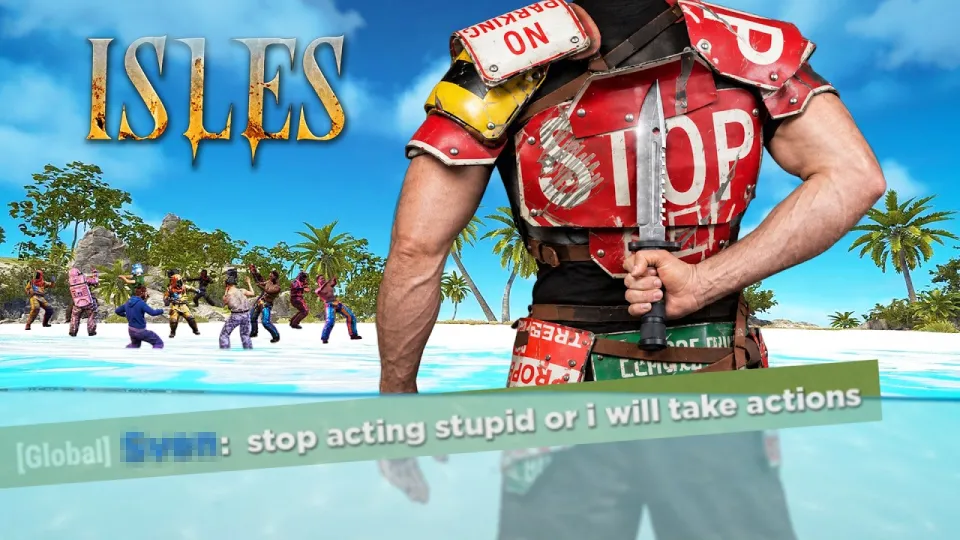
Video: Not Another Rust Streamer Server
You can order the same kind of articles for your own video to boost it on YouTube and Google. Just message the Telegram bot @sat_sit_bot. It writes articles around your video, embeds the video and publishes them on popular niche websites (no ads). Your first 50 articles are free.
A Rust streamer server is a private, invite-only Rust world built for content creators rather than the public wipe cycle — access is granted by the organizers, the population is small and known, and admins watch it closely. The recent Rust Isles project is exactly that: a themed, roleplay-leaning server where selected streamers are placed together and expected to generate stories. Stimpee, who had not touched a streamer server in years, was given access and documented the result; his live channel is at twitch.tv/st1mpee.
What a Rust streamer server actually is
A streamer server is a curated Rust instance where the player list is a casting decision. Instead of a 200-slot public server that wipes monthly and fills with strangers, the organizers hand out access to a few dozen creators, set a theme, and let them loose. Rust Isles uses a pirate-adjacent framing: boats, islands, crews, and a lot of implied loyalty that rarely survives contact with an actual Rust player.
The practical consequences are visible in every clip that comes out of these projects:
- Population is low enough that everyone knows everyone, so reputation replaces anonymity.
- Progression is compressed — fewer hostile neighbors means faster bases, quicker gear, earlier raids.
- Admins are present and interventionist, because the point is watchable content, not fair competition.
- Rules exist around theft, betrayal, and harassment that would never be enforced on a public server.
That last point is the friction. Rust is a game about taking things from people. A server that invites people to play Rust and then asks them not to take things too personally is running against the grain of the game.
How admins handle a player like Stimpee
The most telling detail from this kind of content is admin behavior: moderators on streamer servers will open a player's inventory and remove weapons directly. That is not a mechanic available to ordinary players or ordinary server owners — it is a manual lever pulled when someone is deemed too disruptive.
It reads as a compliment and a containment strategy at once. A player who gets his gear deleted by staff is a player the staff consider capable of ruining the server's story if left alone. On a public server the response to a strong player is a raid; on a streamer server the response is an inventory audit.
For viewers this is the interesting part. The tension is not survival — food, wood, and stone are not scarce when the map is quiet. The tension is social: who gets trusted, who gets robbed, and which admin steps in when the robbery lands badly.
Clans, crews, and why roleplay breaks
Recruiting a stranger into a crew on a roleplay server is a gamble that almost always pays out badly. In the Rust Isles footage, a clan leader brings Stimpee in without much screening, and the arrangement collapses when his new crewmate takes the boat and leaves the rest of the group stranded. The leader then reacts in chat, and keeps reacting long after the moment has passed.
That sequence is the whole genre in miniature:
- The recruiter assumes shared goals because they share a Discord.
- The recruit treats the server as Rust, where a boat is a resource and loyalty is optional.
- The betrayal is a genuinely good story beat that the other side refuses to play along with.
- The argument afterwards is more damaging to the server's atmosphere than the theft was.
Pirate theming makes this sharper. A server built around ships and crews invites exactly the behavior it then tries to police. If stealing is the setting, stealing cannot also be the rule violation.
Solo play versus the streamer ecosystem
Solo Rust and streamer-server Rust are different games with the same assets. A solo player on a public wipe deals with offline raids, roof campers, clan zergs, and hackers; the counterplay is base design, spread loot, and time management. On a streamer server, the counterplay is social — who you know, who is watching, and whether an admin likes the bit.
That is why these servers feel strange to experienced players. There is no real wipe pressure, no anonymous raider at 4 a.m., no need to build a trap base to survive. What replaces it is performance: every interaction has an audience, and the audience rewards the person who breaks the format. A player who plays Rust straight — farms, builds, defends — is boring here. A player who hijacks the premise is the content.
For anyone watching and wondering whether they would enjoy it: if you play Rust for the survival loop, a streamer server removes most of what you like. If you play for the stories, it removes the parts that stop stories from happening.
Common questions about streamer servers
Can anyone join? No. Access is by invitation from the organizers or through creator connections. There is no public IP to connect to and no application form most viewers will ever see.
Is it easier than normal Rust? Mechanically yes, socially no. Fewer raiders means faster progression, but every mistake is public and permanent in the clip ecosystem.
Why do admins intervene so much? Because the server exists to produce watchable moments, and a single player with unlimited gear and no consequences can end the season early.
Why do clans fall apart so fast? Because recruitment is based on availability, not trust, and Rust rewards the person willing to take the boat.
Useful links
- Stimpee on Twitch — live streams and the source of most Rust Isles footage.
- Stimpee on Twitter — schedule and clip announcements.
- Stimpee on Instagram — shorter-form posts.
- Stimpee Discord — community chat and server news.
Final takeaway
A Rust streamer server is a social experiment wearing a survival game's clothes. The interesting failures are never mechanical — nobody starves, nobody runs out of stone — they are about people assuming a shared set of rules that was never written down. The Stimpee channel's return to this format after years away works precisely because its author refuses to play the loyal crewmate, and the server's reaction proves the point better than any raid could. If you want to see how the next invite-only experiment plays out, follow the action live at twitch.tv/st1mpee.
Key takeaways
- Rust Isles is an invite-only streamer server, not a public wipe — access comes through the organizers, not the server browser.
- Admins on streamer servers routinely inspect inventories and strip weapons, which is how they contain players who treat the server as a sandbox.
- Clan and roleplay structures on these servers are fragile: a recruited crewmate who steals a boat and abandons the group breaks the script fast.
- Streamer servers run lighter raid pressure than public Rust, so progression is faster and PvP is more social than survival-driven.
- Stimpee's return to a streamer server after years away is the frame for this breakdown on the Stimpee channel.
Questions & answers
What is a Rust streamer server?
It is a private, invite-only Rust server where access is given to content creators rather than the public. The organizers pick a theme, keep the population small, and moderate actively so the server produces watchable stories instead of a standard wipe race.
Why do admins remove weapons from players on these servers?
Because a single skilled or disruptive player can dominate a small, low-population map and end the server's story early. Staff on streamer servers have direct tools like inventory inspection that ordinary server owners do not typically use mid-wipe.
Is a streamer server easier than normal Rust for a solo player?
Progression is faster because there is less raid pressure and fewer hostile neighbors, but the social stakes are higher. Every betrayal is public, recorded, and remembered by an audience, which changes how players behave far more than loot tables do.
Why do clans on roleplay servers break up so quickly?
Recruitment tends to be casual and based on availability rather than trust, while Rust itself rewards taking resources whenever it is convenient. A themed server that encourages crews and ships also encourages the exact behavior it later tries to restrict.